The grammar rules for punctuating dialogue can be really tricky! It is in the top five of grammatical corrections that I make across all drafts, so if you are having a hard time with it rest assured that you are not alone!
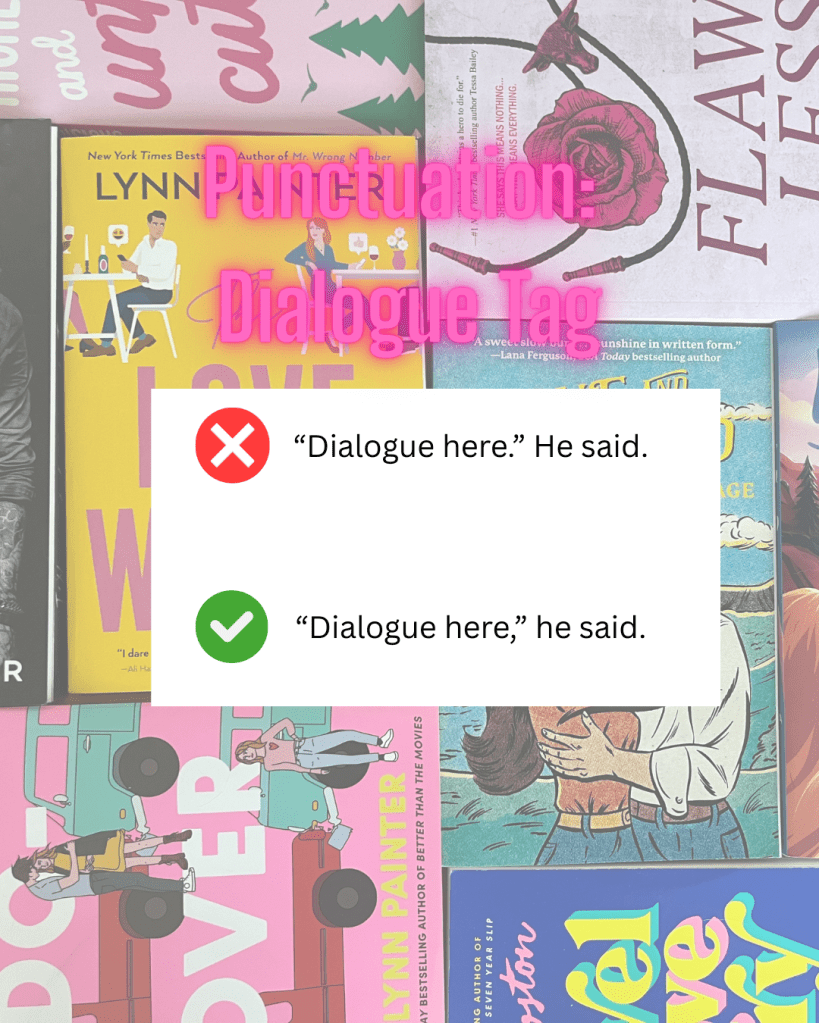
If the sentence in dialogue and outside flow together, use a comma and the word after is lowercase.
❌“Dialogue here.” He said.
✅ “Dialogue here,” he said.
If the sentence in dialogue and the sentence outside of dialogue can stand on their own, use a period and the word after is capitalized.
❌ “Dialogue here,” I trail my fingers across the page.
✅ “Dialogue here.” I trail my fingers across the page.

The same rule applies at the start of a set of dialogue.
❌He nodded, “Dialogue here.”
✅He nodded. “Dialogue here.”

❌He whispered. “Dialogue here.”
✅He whispered, “Dialogue here.”

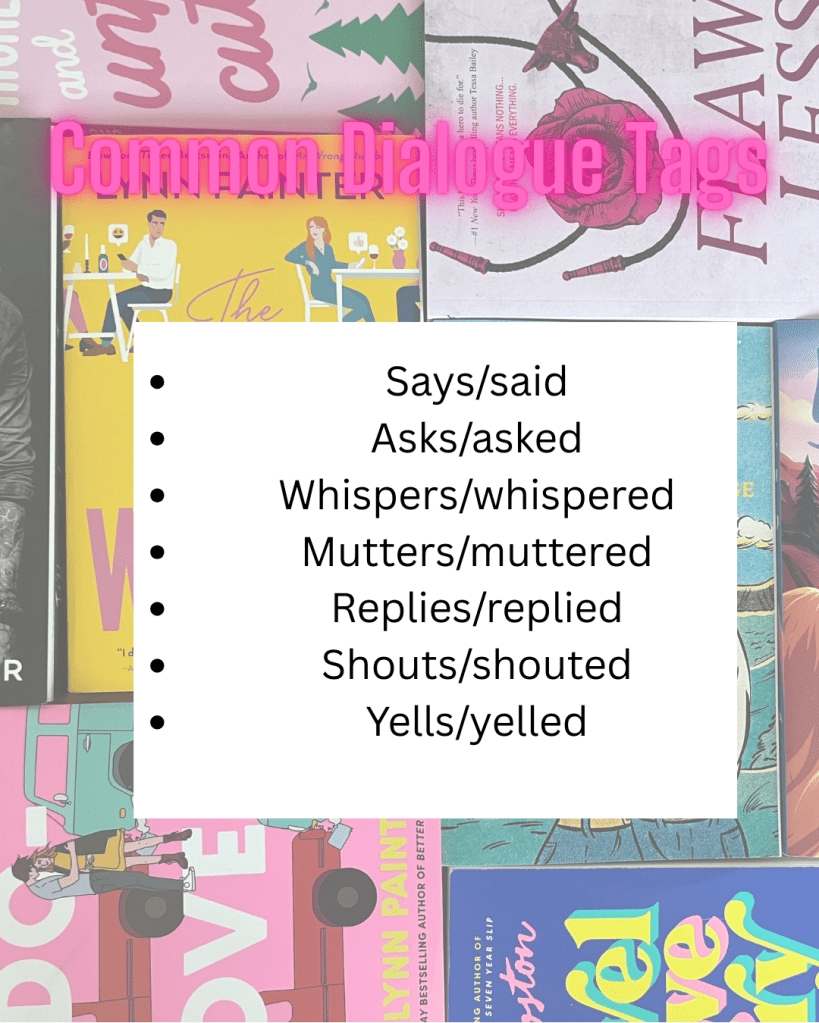
Dialogue tags can make this even trickier. If you’re anything like me, you like to mix up your dialogue tags beyond just the standards. Say/said, ask/asked, whispers/whispered, shout/shouted, mutter/muttered are all great and have their place. Where things get sticky is if you’re using a word that isn’t correlated to speaking as a dialogue tag. In the example below, laughed is an action tag and isn’t describing the dialogue itself. Because of that, the punctuation follows the stand-alone rule.
❌ “You’ve got to be kidding me!” she laughed.
✅“You’ve got to be kidding me!” She laughed.
Another example that I often see is with the word smiled. We can’t smile a sentence out, though we may smile while speaking. Here’s how to think of it:
❌He smiled, “Sure, let’s go.”
✅ He smiled, then replied, “Sure, let’s go.”
In the corrected example, replied is the dialogue tag. It indicates who is speaking and how. He is speaking, and he is speaking in response to the other speaker.

Other rules of dialogue grammar to help as you go:
✅Each time you change speakers, begin a new paragraph.
✅When one character’s dialogue extends beyond one paragraph, use opening quotation marks on each paragraph, but closing quotation marks only on the final paragraph. If the dialogue stretches for three paragraphs, that means you will have three sets of opening quotation marks (one at the start of each paragraph) but only one set of closing quotation marks.
✅Punctuation goes inside of the quotation marks.
Writing dialogue can be one of the most fun ways to really get to know your characters, and to see their personalities shine. It doesn’t need to be intimidating if you know a bit about the rules at play.
It’s also important to note that I edit according to the Chicago Manual of Style rules, and other style systems may treat one or many of these items differently. Chicago is broadly accepted as the standard in fiction writing, which is why it’s the standard that I use across my work. As always, I’m here to chat if you have any questions!
Until next time!
XOXO,
Sam Speed Edits
 Sam Speed Edits
Leave a comment