
If you’ve ever had to pause for a moment to determine whether or not the phrase you wanted to use was home in or hone in, you’re not alone. These are frequently confused, and so I’m going to try and clear it up for you once and for all!
Home is most commonly used as a noun, meaning the place that you live. However, it is used as a verb phrase in the expression “home in on” and its meaning changes entirely. Home in on means “to find and move directly toward someone or something.”

An animal returning to its home or birthplace is known as homing. This is most commonly associated with pigeons, specifically homing pigeons.
In this use, home is being figuratively deployed to describe the action of anyone or anything proceeding toward or directing attention toward an objective.
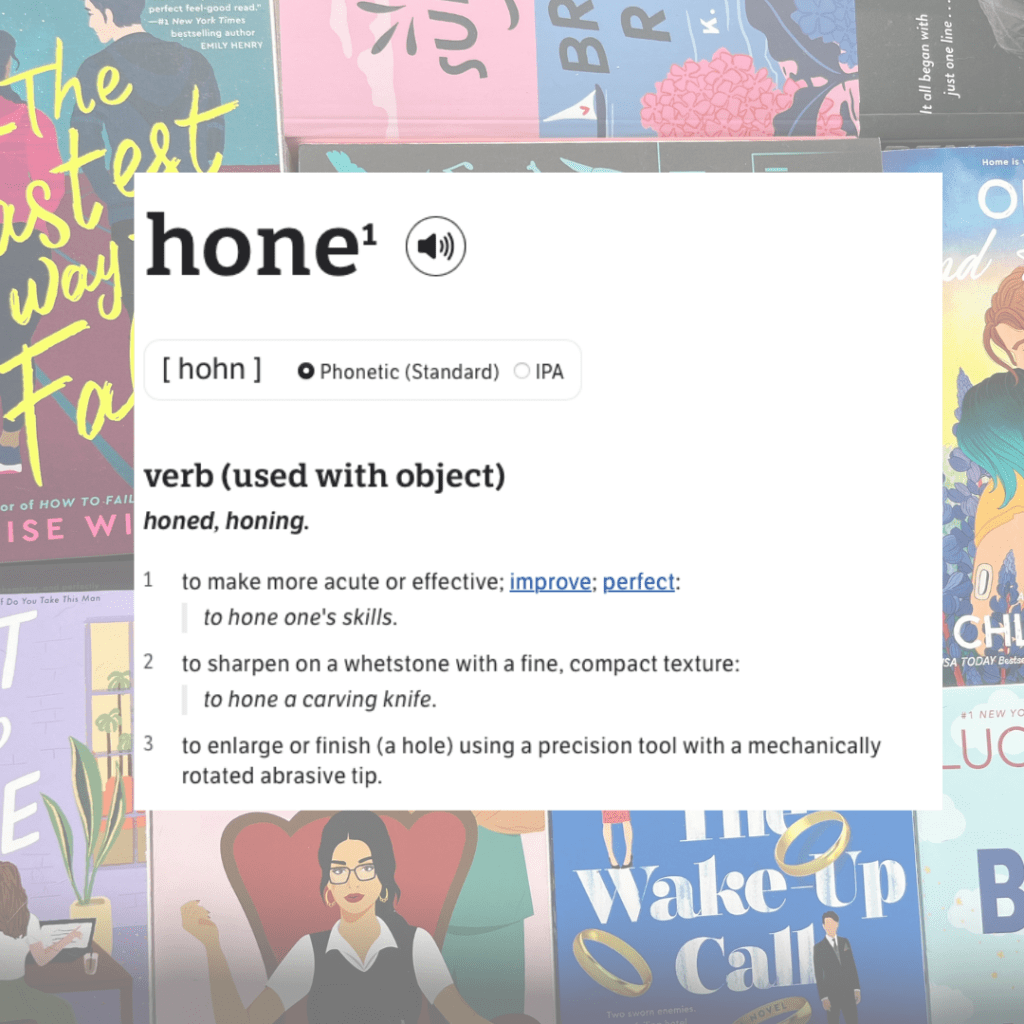
Hone is most often used as a verb meaning “to smooth or sharpen” or “to make more accute, intense, or effective.” Hone in does not actually mean the same thing as home in.
The word hone dates to the early 1700s, when it was used to describe literally sharpening blades. By the early 20th century, the definition of hone had evolved to include more than just the sharpening of blades. People were now also honing skills, a figurative interpretation of the word. It is the narrowing or sharpening focus implied in the fugurative meaning that seems to have made “hone in” seem like the correct phrase rather than “home in.” However, that is not correct.
If you’re trying to describe your character turning their focus on something, the correct phrase is home in. You could also use zero in. Hone in isn’t considered a correct phrase unless used to support the definitions of hone, to make sharper or more acute.
Correct= home in
Incorrect = hone in
I hope this helps!
Until next time!
XOXO,
Sam Speed Edits
 Sam Speed Edits
Leave a comment